Industrial Cleaning vs Manual Cleaning: The Complete Comparison
Most businesses underestimate the hidden costs of manual cleaning. Here's the full picture In 2026, many businesses are shifting toward industrial cleaning methods to improve productivity, hygiene, and overall operational efficiency. What can the readers expect to learn from this blog
4/14/20266 min read
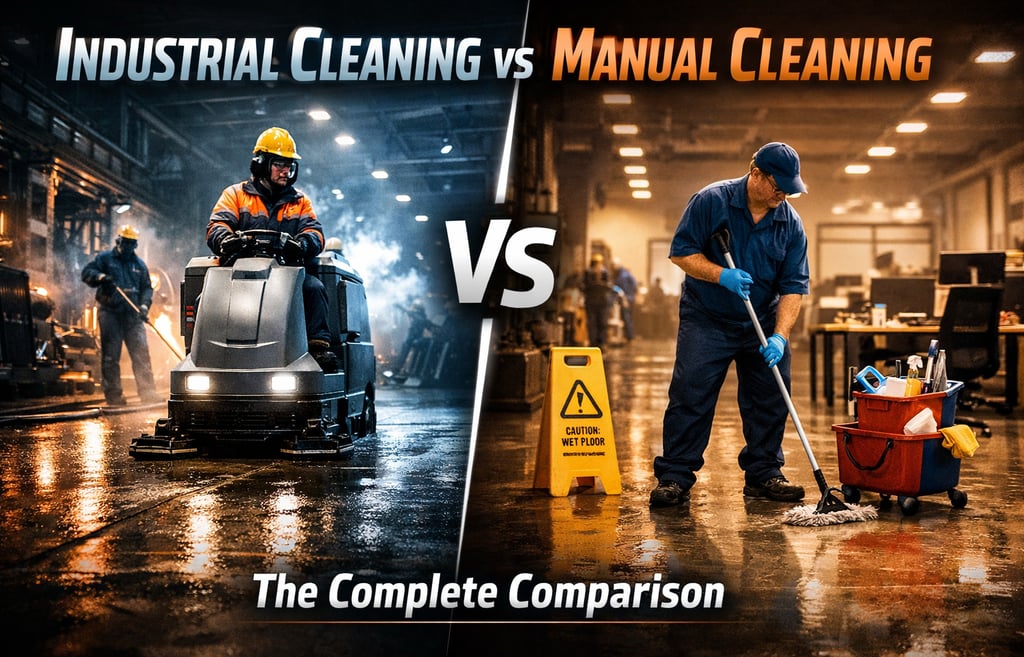
Industrial Cleaning vs Manual Cleaning: The Complete Comparison
Introduction:
Most businesses underestimate the hidden costs of manual cleaning. Here's the full picture
In 2026, many businesses are shifting toward industrial cleaning methods to improve productivity, hygiene, and overall operational efficiency.
What can the readers expect to learn from this blog
IntrodWhat Is Manual Cleaning?
What Is Industrial Cleaning?
Difference Between Industrial Cleaning vs Manual Cleaning
Write a brief description before going over the differences:
Time and Efficiency
Cleaning Quality and Consistency
Labor and Operational Costs
Scalability for Large Spaces
Why are Businesses Shifting to Industrial Cleaning?
Conclusion
A conclusive answer as to whether industrial cleaning is better than manual cleaning
Understanding these differences can help businesses make better cleaning decisions.
Invite readers to comment on their thoughts and suggestions in the comments
Industrial Cleaning vs Manual Cleaning: The Complete Comparison
Most businesses underestimate the hidden costs of manual cleaning, and by the time they realize it, those costs have already eaten into their margins for years. It's easy to see manual cleaning as the "affordable" option. You hire a few workers, hand them mops and brooms, and the job gets done. Simple, right? Not quite.
A growing number of businesses - from warehouses and factories to hospitals and commercial complexes - are making a deliberate shift toward industrial cleaning. Not because it's trendy, but because the numbers and the results make a compelling case.
In this blog, you'll get a clear, honest comparison of industrial cleaning and manual cleaning across the areas that matter most to businesses: efficiency, quality, cost, and scale. By the end, you'll have everything you need to decide which approach is right for your facility.
What Is Manual Cleaning?
Manual cleaning is exactly what it sounds like - cleaning carried out by people using basic tools and equipment. Mops, brooms, scrubbing brushes, handheld vacuums, buckets, and cleaning cloths are the primary tools involved.
It's the oldest and most widely used form of cleaning across homes, offices, and businesses of all sizes. For smaller spaces with low footfall and modest hygiene requirements, manual cleaning can get the job done reasonably well.
However, manual cleaning is heavily dependent on the individual doing the work. The quality of the outcome varies from person to person, day to day. There's no standardized pressure, no guaranteed coverage, and no built-in system to ensure every corner is addressed consistently. For businesses managing large or high-demand facilities, these limitations add up fast.
What Is Industrial Cleaning?
Industrial cleaning uses powered, purpose-built machines operated by trained professionals to clean large or complex spaces systematically and efficiently.
The equipment involved includes ride-on scrubber dryers, industrial sweepers, high-pressure jet washers, industrial-grade vacuum systems, and more. Each machine is designed for a specific type of cleaning task and surface, and together they form a cleaning system that delivers results manual methods simply can't match at scale.
Industrial cleaning isn't just about bigger machines, though. It also involves structured processes, scheduled cleaning cycles, and trained operators who know how to work around active operations without disrupting them. It's a professional service built for professional environments.
The Difference Between Industrial Cleaning and Manual Cleaning
Manual cleaning and Industrial cleaning are fundamentally different approaches. The following are the key differences between the two:
1. Time and Efficiency
When it comes to cleaning big spaces, speed really matters. Businesses often choose between manual cleaning and machines. Both can clean, but they work very differently. The time, effort, and results can change a lot depending on the method. This is where the difference becomes easy to see and important to understand.
2. Cleaning Quality and Consistency
Cleaning quality should not change from one day to the next. But with manual cleaning, it often depends on the person doing the job. Some days are better than others. This makes it hard for businesses to keep the same level of cleanliness, especially in large spaces that need regular attention.
In the end, consistent cleaning matters just as much as speed. Manual cleaning can give mixed results, while machines deliver the same quality every time. For businesses that need high standards, this makes a big difference. It helps you stay ready for inspections and gives confidence that your space is always properly clean.
3. Labor and Operational Costs
At first glance, manual cleaning seems like the cheaper option. You only pay for workers and basic supplies, so the starting cost feels low. But when you look closer, there are many hidden costs. Over time, these extra expenses can add up and make manual cleaning more expensive than expected.
In the long run, cleaning is not just about what you spend today, but what you keep spending over time. Manual cleaning may look cheaper at first, but the hidden costs can grow quickly. Machines cost more upfront, but they save money, reduce risks, and give better value over time.
4. Scalability for Large Spaces
As businesses grow, their cleaning needs grow too. What works for a small space may not work for a large facility. This is where scalability becomes important. The ability to clean bigger areas without a big jump in cost, time, or effort can make a huge difference in daily operations.
In the end, scaling your cleaning process should not mean doubling your problems. Manual cleaning struggles to keep up as spaces grow. Industrial machines make it easier to manage larger areas without adding too many resources. This helps businesses expand smoothly without letting cleaning become a major challenge.
Why Are Businesses Shifting to Industrial Cleaning?
The shift happening across industries in 2026 isn't driven by one single factor. It's a combination of pressures that are making manual cleaning increasingly impractical for serious business operations. Here's what's pushing businesses to make the switch:
Rising hygiene and compliance standards: Food processing, pharmaceuticals, healthcare, logistics, and corporate offices are all being held to higher cleanliness benchmarks by regulators, clients, and industry bodies. Manual cleaning struggles to meet these standards reliably.
Labor dependency is a growing risk: High turnover, absenteeism, and the difficulty of managing large cleaning teams are problems businesses want to reduce, not expand.
Operational efficiency is a competitive priority: Businesses that run leaner, faster, and smarter have an edge. If cleaning can be done in half the time with better results, that's not just a hygiene win, but an operational one.
The long-term math no longer adds up for manual cleaning: When the true cost is calculated - labor hours, inconsistency, re-cleaning, and risk - industrial cleaning is often not the expensive option. It's the smarter one.
The bottom line is simple: businesses that want to stay competitive, compliant, and efficient can't afford to ignore the shift. Industrial cleaning isn't the future anymore; for many industries, it's already the present.
Conclusion
So, is industrial cleaning better than manual cleaning? For small spaces with low traffic and basic hygiene needs, manual cleaning can still do an adequate job. But for any business managing a large facility, operating in a regulated industry, or trying to run an efficient operation, industrial cleaning wins, and it isn't particularly close.
Understanding these differences is the first step to making a smarter decision for your facility. The businesses that are moving ahead in 2026 are the ones choosing tools and processes that match the scale and standards of their ambitions, not the ones still muddying their way through it.
Still weighing your options, or ready to make the switch? Connect with us on WhatsApp, share your facility's cleaning requirements, and we'll help you find the right industrial cleaning solution for your business. No guesswork, no generic packages. just a straightforward conversation about what works for you.
Frequently Asked Questions
1. Can small businesses benefit from industrial cleaning?
Yes. Small businesses like clinics, food outlets, and retail stores can benefit by improving hygiene and efficiency. The key is choosing the right equipment size and a plan that fits their needs and budget.
2. How do I know if my facility is ready to switch?
If cleaning takes too long, hygiene is inconsistent, or managing staff is difficult, it may be time to switch. A professional assessment can help identify the right solution.
3. How do machines handle spills or liquid waste?
Scrubber dryers clean, scrub, and vacuum liquids in one pass. For hazardous spills, specialized equipment and trained operators ensure safe and compliant cleanup.
4. What should I look for in a service provider?
Check their experience, staff training, equipment transparency, and flexibility. A good provider will assess your facility first and recommend solutions tailored to your operations.
5. How quickly can I see results?
You’ll notice cleaner floors and reduced dust from the first session. Operational benefits like efficiency and cost savings usually become clear within a few weeks of regular cleaning.
Contact
Reliable workforce solutions since 1991
Phone
+91 9312077982
© 2026. All rights reserved.
+91 9999261934